
Toproll in arm wrestling is a style where you roll your hand over the top of the opponent’s hand and pull their fingers back and away. Your back and shoulder do the pulling, while pronation (turning the palm down) and finger strength hold the position. This guide shows the set-up, how to train the toproll, how to counter it and which tools fit.
What is toproll in arm wrestling?
Toproll is one of the three main styles, next to the hook and the press. It is also written as top roll. The name describes the movement. Your hand travels over the top of the opponent’s hand and rolls it. The aim is to open their fingers, turn their hand and pull it out of line, so they cannot hold their position under your pull.
Toproll is not a shortcut. It only works when your own fingers, wrist and back can hold the position. For a side-by-side view of all three styles, see the techniques overview.
How the toproll works
Set-up and grip
Take the grip palm to palm and slide your hand high on the opponent’s hand, towards their fingertips. In the World Armwrestling Federation (WAF) rule book, version 2026, the thumb knuckle must be visible and the wrists straight when the referee starts the match. Wrap your fingers and keep them pulling the opponent’s fingers towards you.
Hand and wrist
Keep the wrist straight or slightly open, not curled in. Turn your hand over the top of theirs (pronation), so your palm faces more downwards. If the wrist curls in, the toproll turns into a hook. Read more about the forearm turn in pronation and supination.
Arm and elbow
Keep the elbow planted on the pad. The rule book gives a foul when the elbow lifts off the pad. Let the forearm do the turning, and let the pull come back and slightly out, not straight down.
Body
Sit or stand square to the table, with the shoulders square. Brace your legs: the rules allow you to wrap a leg around the table leg before the start. Pull back with the back and the rear shoulder, and keep the shoulder in line behind the arm. Throwing the shoulder ahead of the arm and hand is a dangerous position under the rules.
At the signal, pull in one smooth movement. A jerk wastes the grip you built in the set-up.
How to train the toproll
Toproll training has four parts: forearm rotation, fingers, back pull and the set-up itself. The sets and reps below are a starting point; adjust them to how you feel. Warm up first and control the weight on every rep.
- Pronation: turn the forearm inward against a load with a pronator handle or a wrist wrench. Try 2 to 3 sets of 6 to 10 slow reps. See the pronation and supination exercises and the wrist wrench guide.
- Roll-over with a cone: on a cable or pulley, roll the wrist and fingers over a cone against the load. Keep the elbow still.
- Fingers and thumb: hold and pull with the fingers wrapped. See finger and thumb exercises and grip training.
- Back and shoulder: rows and pulldowns build the pull. See upper-body exercises.
- Table practice: with a partner, set up slowly, take the high grip and practise the first part of the roll at low effort. Add speed only when the position holds.
A couple of toproll sessions a week is a starting point. Keep rest days between hard sessions. The weekly program shows how to fit it in.
How to counter toproll
To beat toproll in arm wrestling, stop it from getting started. It fails when the opponent keeps the fingers closed and the hand deep.
- Take the grip first. Get your hand deep into theirs before the start, so they cannot go high on your fingers.
- Keep your fingers wrapped and your wrist strong. Do not let them open your hand.
- Bring your wrist in (cupping) and go to a hook, so their hand is trapped inside yours. See the hook guide and the cupping guide.
- Keep your elbow planted and do not chase their hand with your shoulder.
- Use side pressure to push their hand away from your fingers. See back pressure and side pressure.
- A press can also beat a toproll that has no power behind it. See the press guide.
Common mistakes
- Pulling with the arm only, without the back.
- Curling the wrist in, which turns the roll into a weaker hook.
- Letting the elbow lift off the pad, which is a foul.
- Starting the pull before the signal. Early movement is a warning, and two warnings equal one foul.
The right equipment for toproll
Toproll tools train the roll-over, the forearm turn and the grip. The Conic Core is a cone-shaped core for rising and toproll work, in sizes 70, 80 and 90. The Palmer Grip CORE has an oversized palm and thumb shape that simulates the grip of a larger, stronger opponent. The Pronator is a pronation handle for forearm rotation work. A personalised strap connects a handle to a cable, pulley or loading pin, in lengths from 1 m to 2.5 m.
The cores are used with a 16 mm metal rod. For the Conic Core, the metal part is not included. For help choosing shapes and sizes, see the handle guide.
-
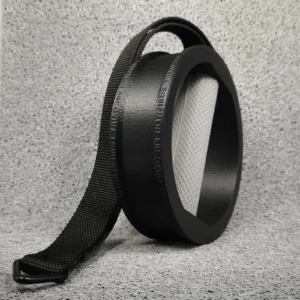 Pronator€ 15,00
-
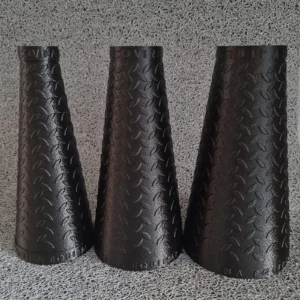 Conic Core€ 10,00
-
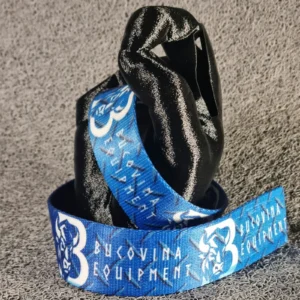 Personalized strap 40mmPrice range: € 5,00 through € 12,50
-
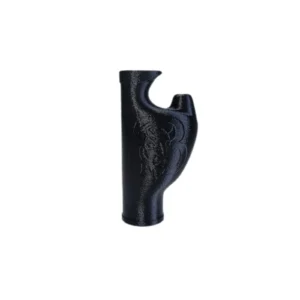 Palmer Grip COREPrice range: € 7,00 through € 8,00
Free shipping to EU countries from EUR 100. Dispatch within 24 hours on working days.
Questions
What is toproll in arm wrestling?
Toproll is a style where you roll your hand over the top of the opponent’s hand and pull their fingers back and away. It relies on pronation, finger strength and the back. To compare it with the hook and the press, see the techniques overview.
How do I beat a toproll?
Take a deep grip before the start, keep your fingers wrapped and your wrist strong, and bring your wrist in to hook their hand. Use side pressure to move their hand off your fingers, and keep your elbow planted on the pad.
How do I train toproll?
Train forearm rotation, fingers and back. Use a pronator handle or wrist wrench, a cone on a cable, finger holds and rows, plus slow table practice with a partner. The sets and reps are a starting point, so adjust them to how you feel.
How can I improve my toproll?
Work on the set-up first: a high grip, a straight wrist and a planted elbow. Then add pronation work and back strength. Film short sessions with a partner and look at where your wrist or elbow gives way.
Is toproll better than hook?
Neither is better in general. Each style loads different muscles, and the right choice depends on your body and your opponent. Compare them in the hook vs toproll vs press table.