
Grip training for armwrestling means training four kinds of grip: crush (squeezing), pinch (thumb against fingers), support (holding a load for time) and thick grip (holding a wide handle). Train them one or two days a week with short holds, and add time or load in small steps.
Why grip matters in armwrestling
Arm wrestling grip comes down to one fact: your hand is what holds the opponent’s hand, so a weak grip loses the position before the arm gets to work. Grip also feeds hook and toproll, where the fingers and the palm stay closed under pressure. For the finger side of this, see finger and thumb exercises. For the question of hand grippers, see the guide on hand grippers and grip balls.
Grip training exercises
Sets and reps below are a starting point; adjust them to how you feel.
Squeeze and hold
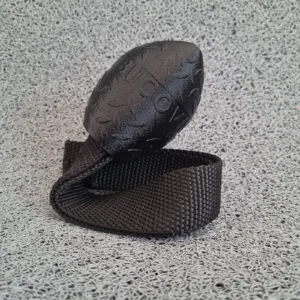
Trains the crush grip. The Grip Ball Extreme Ellipsoid 60 weighs 150 g and the Grip Ball Extreme Ellipsoid 70 weighs 200 g. An ellipsoid is a rounded, egg-like shape that fills the hand, so the fingers and palm work to hold it.
- Close the hand around the ball.
- Squeeze and hold for the set time.
- Release slowly, shake out your hand, and repeat.
- For more load, connect it to a cable with the strap and pull against the load.
Common mistakes: letting the wrist bend, holding your breath, and squeezing in short bursts. Start with 3 holds of 15 to 30 seconds.
Thick-grip static hold
Trains the support grip with a wide handle. The wider the handle, the harder it is to close the hand. The Cylindrical Core is a thick, straight cylindrical handle, in diameters 50, 60, 70 and 80. It suits a metal rod with a diameter of 16 mm and a length of 17 cm; the metal part is not included.
- Mount the rod in a frame, such as the Core Frame, then slide the core on.
- Grip the core and hold the load for time.
- Put the load down under control.
- Start with a smaller diameter and move up as your grip gets stronger.
Common mistakes: starting with a diameter that is too large, and letting the fingers slip. Start with 3 holds of 20 to 40 seconds.
Palm-shape pull
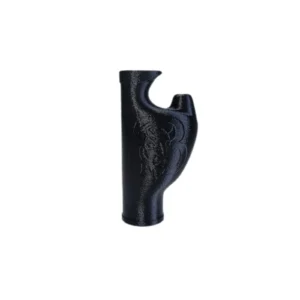
Trains the fingers, the palm and the thumb against a larger hand shape. The Palmer Grip CORE simulates the grip of a larger, stronger opponent. Its oversized palm and thumb shape forces your fingers, wrist and forearm to work harder. It comes in sizes S, M and L.
- Slide the core onto a metal rod, 170 mm high and 16 mm in diameter.
- Squeeze and hold: close the hand around the core and hold the load.
- Pull: pull against the load, keeping the fingers wrapped.
- Start with size S and move up as your grip gets stronger.
Common mistakes: letting the fingers open as you pull, and using too much load. Start with 3 sets of 6 to 8 slow pulls.
Size ladder
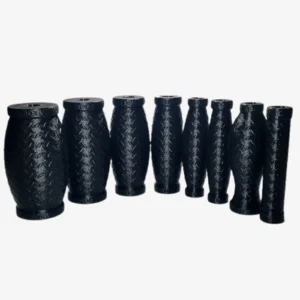
Trains the grip at several widths with the Basic Elliptical Core Set. The set has 8 elliptical training handles, with diameters from 35 mm to 80 mm. It works only with a metal rod 170 mm high and 16 mm in diameter.
- Pick a handle you can control and hold it for the set time.
- Work through the sizes from large to small, or the other way round.
- Rest between handles.
- Add difficulty step by step.
Common mistakes: skipping sizes, and rushing between handles. Start with 3 handles, 15 to 20 seconds each.
Farmer’s hold
Trains the support grip with no equipment other than weights.
- Stand tall with a heavy dumbbell or a loaded bag in each hand.
- Hold them at your sides for time, or walk a short distance.
- Keep the shoulders back and the wrists straight.
- Put the weights down under control.
Common mistakes: slouching, and weights so heavy the grip opens quickly. Start with 3 holds of 20 to 40 seconds.
A sample grip session
- Squeeze and hold: 3 holds of 15 to 30 seconds.
- Thick-grip static hold: 3 holds of 20 to 40 seconds.
- Palm-shape pull: 3 sets of 6 to 8 slow pulls.
- Farmer’s hold: 3 holds of 20 to 40 seconds.
Rest one to two minutes between sets. Do the thick-grip hold and the farmer’s hold early in the session, while your hand is fresh.
How to progress
- Add time to the holds first.
- Then add a little load or a wider handle and go back to short holds.
- Train grip one or two days a week, and place it after your main lifts.
- Keep a rest day between sessions that load the hand hard.
Tools for grip training
Grip balls, cylindrical cores, the palm-shaped core and the elliptical set are all in the grip training range. To choose a diameter that fits your hand, use the size guide. For other handle shapes, see the handles guide.
-
 Grip Ball Extreme Ellipsoid 60€ 7,00
-
 Grip Ball Extreme Ellipsoid 70€ 7,00
-
 Basic Elliptical Core SetPrice range: € 7,00 through € 55,00
-
 Palmer Grip COREPrice range: € 7,00 through € 8,00
Free shipping to EU countries from EUR 100. Dispatch within 24 hours on working days. Back to the training hub.
Questions
Does grip strength matter in arm wrestling?
Yes. Your hand holds the opponent’s hand, so the grip decides how well you keep the position under pressure. It works together with the wrist and the forearm.
How to increase grip strength?
Train crush, pinch, support and thick grip one or two days a week with short holds. Add time first and then a little load.
What is fat grip training?
Fat grip or thick grip training uses a wide handle, so the hand has to open further and work harder to hold it. A cylindrical core is one tool for it.
Do grip balls work?
A grip ball loads the fingers and the palm when you squeeze and hold. Used with a slow progression, it trains grip strength.
How do I train grip without equipment?
Wring a towel, hold a towel over a bar, and carry heavy bags. The at-home plan shows how.
Do hand grippers help in arm wrestling?
They train the crush grip, which is only one part of what you need. See the guide on hand grippers and grip balls.