
Armwrestling is a one-on-one sport: two athletes grip hands, keep one elbow on a pad and try to pin the opponent’s hand. Below are short answers about the basics, hands and grip, equipment and sizing, competition, and orders and shipping. Each answer links to the page that covers the topic in depth.
Basics and winning
What is arm wrestling?
It is a one-on-one strength sport. Two athletes grip hands, keep one elbow on a pad and try to press the opponent’s hand onto a touch pad. The how to armwrestle guide explains it step by step.
How does arm wrestling work?
The athletes take their grip at the table, the referee checks it and calls "Ready… Go!". The athlete who pins the opponent’s hand wins, and two fouls lose a match. See the rules page.
How do you win an arm wrestling match?
You win by pinning: any part of the opponent’s hand from the natural wrist line to the fingertips touches the touch pad. You also win if the opponent collects two fouls. The rules page lists the fouls.
Is arm wrestling about strength or technique?
Both. Strength matters, but leverage, grip, timing and the style you use decide who makes the best use of it. Start with the learn section.
How can I beat a stronger opponent?
Work on leverage and on a style you can control instead of trying to out-muscle the other athlete. Train your start, wrist and fingers too. See the how to armwrestle guide.
How do I start arm wrestling as a beginner?
Learn the start and the rules, then practise with a partner and train the movements with a simple plan. The beginner plan and the start your journey page show the order.
Does bench press help arm wrestling?
Pressing builds chest, shoulder and triceps strength, but armwrestling is mostly pulling and rotating with the back, biceps, forearm, wrist and fingers. Use pressing as support, not as the main work. See the upper body exercises.
Which muscles does arm wrestling use?
It uses the fingers, wrist, forearm, biceps, shoulder and back working together. The upper body exercises page goes through them.
What are the hook, the toproll and the press?
They are the three main styles. The hook pulls the opponent’s hand towards you, the toproll rolls over the top of the opponent’s hand, and the press drives the hand down towards the pad. Read the guides on the hook, toproll and press.
Can I practise arm wrestling at home?
Yes. You can train the movements with handles, a strap and a cable, pulley or loading pin, or with bands, and use a table for match practice. See the at-home plan.
Hands and grip
Does hand size matter in arm wrestling?
It changes how you grip and which handle diameter suits you, but it is one factor next to technique and strength. The size guide helps you pick a handle diameter.
Can you arm wrestle with small hands?
Yes. The WAF rule book sets classes by body weight, age and sex, and it has no hand size limit. Choose handles that fit your hand: see the handles guide.
How do I pick handles for a small hand?
Start with a diameter you can close your hand around with control, then move up as you get stronger. The Basic Elliptical Core Set has 8 handles from 35 mm to 80 mm, and the size guide helps you choose.
Does grip strength matter in arm wrestling?
Yes. Strong fingers and thumb help you hold the opponent’s hand and keep control of the grip, and wrist and forearm strength support them. See grip training.
Do hand grippers help with arm wrestling?
Grippers and grip balls train the closing strength of the hand. Armwrestling also needs wrist, pronation and supination strength, so use them as one tool among several. See the grippers and grip balls guide.
What are pronation and supination?
Pronation turns the forearm so the palm faces down; supination turns it so the palm faces up. Both matter in armwrestling. Read pronation and supination.
What is cupping in armwrestling?
Cupping means curling your wrist and fingers inward around the opponent’s hand to control it. See the cupping guide and the cupping handles.
How do I train my fingers and thumb?
Work your fingers and thumb with handles, finger trainers and grip balls, and keep the load under control. See finger and thumb exercises and the finger and thumb trainers.
Equipment and sizing
What equipment does a beginner need?
You can start with handles that fit your hand and a way to load them, such as a strap with a cable, pulley or loading pin. The equipment guides and the start your journey page show a sensible order.
How do I choose a handle size?
Pick a diameter your hand can close around with control and move up in steps. Use the size guide and the handles guide.
What fits on the 16 mm rod?
The Palmer Grip CORE, Basic Elliptical Core Set and Cylindrical Core work with a metal rod 16 mm in diameter and 17 cm long. The Core Frame carries a 16 mm rod that the cores slide onto.
Is the metal rod included with the cores?
Not for the Cylindrical Core, Conic Core, Hook Lock Core and Eccentric Core: their product pages say the metal part is not included. Check the page of the core you want, for example the Cylindrical Core.
Can I use handles with a cable or pulley?
Yes. The Palmer Grip CORE is made for table training, cable setups and home gyms, and it works with pulley systems and loading pins. See the pulley and cable guide.
What is an armwrestling strap?
In training, a strap connects a handle or your hand to a cable, pulley or loading pin. In competition, the referee uses a strap to restart a match after a slip-out. See the straps and belts guide.
Which strap lengths do you offer?
The Personalized strap 40mm is 40 mm wide and comes in 1 m, 1.5 m, 2 m or 2.5 m. We personalise it with the name or logo you supply. See the personalised strap.
What does WLL mean on a carabiner?
WLL means working load limit, the load the carabiner is rated to carry. Our steel carabiner comes in three sizes with working load limits of 80 kg (60×6), 150 kg (80X8) and 250 kg (100×10), and you should never load it above its limit. See the carabiner.
How tall is an armwrestling table?
The WAF rules give 71.1 cm for a sit-down table and 101.6 cm for a standing table, measured from the floor to the tabletop. See the armwrestling table guide.
Do I need a table to train?
No. You can train the movements with handles on a cable, pulley or loading pin, and you need a table only for match practice. See the at-home plan.
How do I look after my training tools?
Keep them dry and clean, check them before each use, and stop using any that are cracked, bent, frayed or damaged. Keep them away from high heat, such as a hot car or a radiator. More is on the product safety page.
-
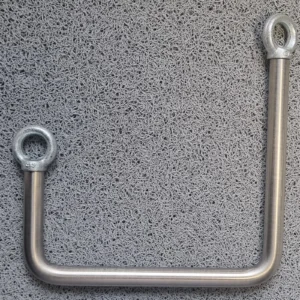 Core Frame€ 30,00
-
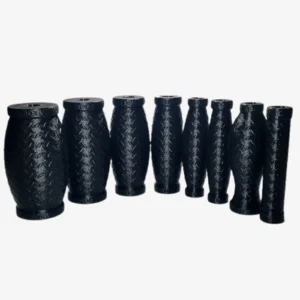 Basic Elliptical Core SetPrice range: € 7,00 through € 55,00
Competition
What are the rules of arm wrestling?
Grip palm to palm, keep the elbow on the pad, start square and straight, and pin the opponent’s hand to win. Two warnings make a foul and two fouls lose the match. The full summary is on the rules page.
What counts as a foul in arm wrestling?
The main fouls are lifting the elbow off the pad, crossing the centreline with the shoulder, moving in a referee’s grip, causing a slip-out and dropping into a dangerous shoulder position. The rules page has the full table.
Are there weight classes in arm wrestling?
Yes. The WAF 2026 rule book has 11 senior classes for men and 8 for women, plus classes for juniors, masters and para-athletes. See the weight classes page.
Do women arm wrestle men?
The WAF rule book lists separate women’s classes in the senior, youth, junior, sub-junior, masters and grand masters groups. See the weight classes page.
How old do you have to be to compete?
In the WAF rule book the youngest group is sub-junior, for ages 14 to 15. Local events may set their own limits, so ask the organiser. See the age groups.
What is para armwrestling?
It is the WAF competition for athletes with an impairment, with sit-down and stand-up classes. The rule book has its own classes for physical, upper-limb, visual and hearing impairment and cerebral palsy. See the weight classes page.
How do I join an arm wrestling competition?
Find the organiser or your national federation, check your class and register before the deadline. World and European championships are entered by national teams. Read the competition section.
Are there separate events for the left and the right arm?
Yes. The WAF rule book has right-arm and left-arm events, and at WAF championships they are held on separate days. See the competition section.
Can I wear a wrist wrap in competition?
No. The WAF rules do not allow wrist wraps, straps, elbow supports, protective wraps, rings or bangles on the arm. See the rules page.
How long does a match last?
The rules set no time limit during a bout. The head referee can stop a match if an athlete is unfit to continue. See the rules page.
What are the WAF and the EAF?
The World Armwrestling Federation (WAF) is the world body that publishes the rule book. The European Armwrestling Federation (EAF) is the European body, and its official competitions follow the WAF rules. See where to find a club or event.
Orders, shipping and returns
Where do you ship?
We ship to EU countries only. We do not ship outside the EU. See the shipping page.
How much is shipping?
Shipping is a flat rate per order and depends on the country. For example, it is EUR 6.95 for the Netherlands, EUR 11.95 for Belgium and EUR 12.95 for Germany, Luxembourg, France and Italy. The shipping page lists every country.
Is shipping free?
Shipping is free from EUR 100 order value. See the shipping page.
How fast do you dispatch an order?
We dispatch within 24 hours on working days. See the shipping page.
Which payment methods do you accept?
Payment goes through Stripe, and the methods you can use are shown at checkout. Browse the shop to start an order.
Can I return an item?
Yes. You have a 14-day right of withdrawal. Read the withdrawal and returns page.
Who pays for the return?
You pay the return costs. See the withdrawal and returns page.
Can I return a personalised strap?
No. Items made to your own specification, such as a strap with your name or logo, cannot be returned. See the withdrawal and returns page.
How do I withdraw from an order?
Use the online withdrawal form within the 14 days. The withdrawal and returns page explains the steps.
How do I contact you?
Use the contact page for questions about an order or a product.
Free shipping to EU countries from EUR 100. Dispatch within 24 hours on working days.