
The three main arm wrestling techniques are the hook, the toproll and the press. The hook curls your wrist in and pulls the opponent’s hand towards you, the toproll rolls your hand over the top of theirs and works on their fingers, and the press drives their hand down with your shoulder and body weight. The table below compares the three, and every technique has its own guide.
Arm wrestling techniques compared: hook vs toproll vs press
Many pullers mix styles, but each style has a clear main idea. The toproll is also written as top roll. The table shows general tendencies, not fixed rules, and coaches use these words in slightly different ways.
| Feature | Hook | Toproll | Press |
|---|---|---|---|
| Main idea | Curl the wrist in, wrap the fingers deep and pull the hand towards your body | Roll your hand over the top and pull the opponent’s fingers back and away | Push the hand down towards the pad with the shoulder, chest and body weight |
| Hand and wrist | Wrist curled in (cupping), fingers wrapped deep | Wrist straight, hand turned over (pronation), grip high on the fingers | Wrist firm, arm straight and braced behind the hand |
| Main work | Biceps, forearm flexors, back | Forearm rotation, fingers, back | Triceps, shoulder, chest, body weight |
| Works well when | The grip is deep and the opponent’s wrist can be trapped | The opponent cannot keep the fingers closed or the hand deep | You have a clear lever and weight advantage over the hand |
| Weak point | A toproll or a press can beat a hook that is too shallow | A deep hook or a firm wrist can stop the roll | The rules watch the shoulder position closely, and a hook can trap the pressing arm |
| Guide | Hook guide | Toproll guide | Press guide |
Hook vs toproll vs press is not a ranking. Each style loads different muscles and fails in a different way, which is why experienced pullers learn to switch.
Which is best, hook or toproll?
Neither is best in general. The better choice depends on your body, your strengths and your opponent. A hook needs a strong wrist, strong biceps and a deep grip. A toproll needs strong fingers, forearm rotation and a strong back. If you are new, learn the set-up first with how to win at arm wrestling. Then try each style slowly with a training partner and keep the one that feels natural.
Every technique and move explained
Each guide covers the set-up, how to train, how to counter the move and the tools that fit.
- Toproll: the roll-over style that attacks the fingers. It is built on pronation, finger strength and back pull.
- Hook: the close, curled style that traps the opponent’s wrist.
- Press: the straight, heavy style that drives the hand down. It is also called the flop press.
- King’s move: a debated style, described as part of toproll fighting or as a mix of hook and press.
- Back pressure and side pressure: the backward and sideways forces that move the opponent’s hand off line.
- Cupping: the wrist curl behind the hook.
- Rising: lifting the hand towards the thumb side, trained with a cone or a riser.
- Pronation and supination: the two forearm turns, palm down and palm up.
- How to win at arm wrestling: stance, grip, hand and elbow position, tips for beginners, and how to beat a stronger opponent.
Not sure about a word? Look it up in the armwrestling glossary. Short answers to common questions are on the FAQ page.
Rules that shape every technique
Technique has to stay inside the rules. In the World Armwrestling Federation (WAF) rule book, version 2026, the grip is palm to palm with the thumb knuckle visible, the shoulders stay square to the table and the elbow must stay in contact with the pad. Back pressure that pulls the opponent’s arm across the marked centre of the table is not allowed. Forcing the shoulder inwards, ahead of the arm and hand, is a dangerous position. Read the armwrestling rules before you enter a match, and check the rules of your own event.
Train the techniques
Technique improves when the body can hold the position. Start on the training hub: forearm rotation and wrist work, finger and thumb strength, grip, and back and shoulder exercises. Beginners can follow the beginner plan. For handle shapes and straps, see the handle guide.
Tools for technique work
Two cores cover two of the three styles. The Hook Lock Core is made for hook and cupping training. The Conic Core is a cone-shaped core for rising and toproll work. The metal part is not included with either. Cores in this range are made for a 16 mm rod, for example the rod of the Core Frame.
-
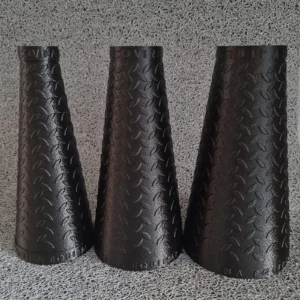 Conic Core€ 10,00
-
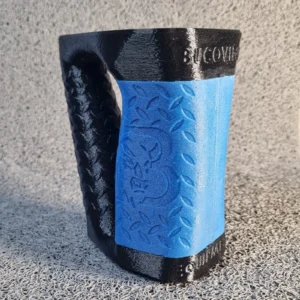 Hook Lock Core€ 20,00
Free shipping to EU countries from EUR 100. Dispatch within 24 hours on working days.
Questions
Which is stronger, hook or toproll?
Neither is stronger in general. A hook uses the biceps, forearm flexors and back, and a toproll uses forearm rotation, fingers and back. The style that wins depends on the two pullers and on who gets the better grip.
What is the difference between hook and toproll?
A hook curls the wrist in and pulls the hand towards your body. A toproll turns the hand over the top and pulls the opponent’s fingers back and away. See the hook guide and the toproll guide.
Can I use more than one technique?
Yes. Many pullers start in one style and change when it stops working. Learn one style well first, then add the others.
What should a beginner learn first?
The set-up: stance, grip, and elbow and shoulder position. After that, try hook and toproll slowly with a partner. The beginner plan shows a simple order.