
Side pressure in arm wrestling is force you push sideways along the table to move the opponent’s hand off its line, and back pressure is force you pull backwards towards your own side with the back and the rear shoulder. Both change the angle of the opponent’s arm. The rule book bans back pressure that pulls the opponent’s arm across the marked centre of the table, so use it with care.
This guide explains both, how to train them and how to defend against them.
What is side pressure in arm wrestling?
Side pressure is a sideways push or turn of the opponent’s hand along the table, instead of straight down or straight back. It takes their hand and wrist off the straight line to their shoulder. Pullers use it to move the opponent’s hand away from their own fingers, to stop a hook from tightening, or to open the opponent’s position before a pull.
Coaches use the words side pressure and back pressure in slightly different ways. This page uses the common meaning. Side pressure comes from the chest and the shoulder, with the whole body leaning into the push, with the wrist and fingers held firm.
What is back pressure in arm wrestling?
Back pressure is a pull of the opponent’s arm across the table towards your own side, using the back, the biceps, the rear shoulder and a lean of the body. It moves the opponent’s arm back and makes their elbow and shoulder lose the line behind the hand. It is a normal part of a strong pull.
The rules limit it. In the World Armwrestling Federation (WAF) rule book, version 2026, back pressure that pulls the opponent’s arm across the marked centre of the table is not allowed, and it counts as a false start. Before the start, in a referee’s grip, back pressure counts as movement and gives a foul.
How to use back and side pressure
Set-up and grip
Take the grip palm to palm with the thumb knuckle visible and the wrists straight. Do not apply pressure before the referee says go.
Hand and wrist
Both pressures need a firm wrist and closed fingers. A wrist that folds under sideways load loses the line at once. See the wrist and forearm exercises.
Arm and elbow
Keep the elbow planted on the pad. A foul is given when the elbow lifts, and when the elbow slides beyond the side of the elbow pad while the arm rides on the triceps or forearm.
Body
Sit or stand square with the shoulders square. Brace your legs, which the rules allow. Let the back and the rear shoulder do the work for back pressure, and the shoulder and the leaning body for side pressure.
How to train back pressure and side pressure
The sets and reps below are a starting point; adjust them to how you feel. Warm up first and control the weight on every rep.
- Cable pulls: set a cable at table height and use a handle on a strap. With the elbow on a pad, pull backwards for back pressure and sideways along the table for side pressure. Move slowly and keep the shoulders square. Try 2 to 3 sets of 6 to 10 reps. See the pulley and cable guide.
- Back strength: rows and pulldowns build the pull. See upper-body exercises.
- Wrist and fingers: hold a handle firm while the load pulls sideways. See finger and thumb exercises.
- Table practice: with a partner, apply the pressure at low effort inside the rules, then add load only when the position holds.
Keep rest days between hard sessions. The weekly program shows how to fit it in.
How to defend against side pressure and back pressure
- Keep the elbow planted and bent, and keep your hand in line with your shoulder.
- Take the grip first and keep a deep grip, so the pressure cannot slide the hand off.
- Keep the wrist strong and the fingers closed.
- Against side pressure, hook their hand to bring it inside yours, or roll your hand over theirs with a toproll. See the hook guide.
- Against back pressure, stay close and square to the table and do not lean away.
- If the opponent pulls your arm across the centre of the table, hold your position and let the referee call it.
The right equipment for pressure training
Pressure work uses a cable, a strap and a handle. The Core Frame carries a 16 mm rod that cores slide onto, and you use it with your own cable, pulley or loading pin set-up. The Carabiner is made of steel and comes in three sizes, 60×6, 80X8 and 100×10; the shop lists working load limits of 80, 150 and 250 kg for them. Check the limit of your size before you load it, ask us when in doubt, and never go above it. A personalised strap connects a handle to a cable, pulley or loading pin, in lengths from 1 m to 2.5 m.
Training straps are for training. The WAF rule book does not allow wrist wraps or straps on the arms in a match.
-
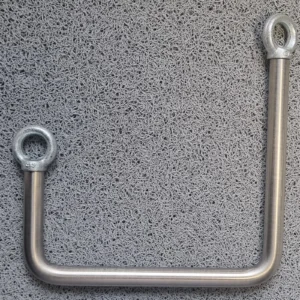 Core Frame€ 30,00
-
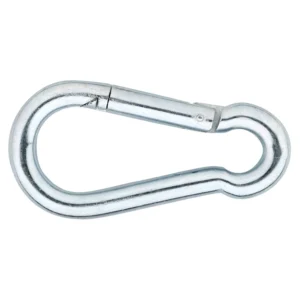 Carabiner€ 2,00
-
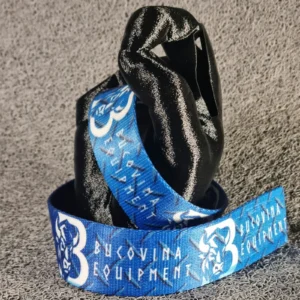 Personalized strap 40mmPrice range: € 5,00 through € 12,50
Free shipping to EU countries from EUR 100. Dispatch within 24 hours on working days. See the straps and belts guide for lengths, and the straps, belts and accessories for more.
Questions
What is side pressure in arm wrestling?
Side pressure is a sideways push or turn of the opponent’s hand along the table. It takes their hand and wrist off the straight line to their shoulder.
What is back pressure in arm wrestling?
Back pressure is a pull backwards towards your own side with the back and rear shoulder. It moves the opponent’s arm back and opens their position.
Is back pressure allowed?
Back pressure is part of normal pulling, but the WAF rule book does not allow it to the extent that it pulls the opponent’s arm across the marked centre of the table. That counts as a false start.
How do I train side pressure?
Use a cable set at table height with a handle on a strap. Keep the elbow on a pad and pull sideways along the table, slowly, with firm wrist and fingers. The sets and reps are a starting point, so adjust them to how you feel.
How do I train back pressure?
Pull backwards on a cable with the elbow on a pad, and add rows and pulldowns for the back. Keep the shoulders square and control the weight.
How do I defend against side pressure?
Keep the elbow bent and planted, keep your hand in line with your shoulder, and hook or roll their hand so the sideways push loses its line.
How can I improve my side pressure?
Build a firm wrist and fingers first, then add cable work and slow table practice with a partner. Strong shoulders and upper back help the push.