
What is a riser in arm wrestling? A riser is a handle for rising, which means lifting the hand up towards the thumb side of the wrist while the forearm stays still. Rising trains the wrist movement that lifts and holds the hand against pressure.
You load it with a cone or riser handle on a cable, a strap or a weight. This page explains the movement, how to train it and which tools fit.
What is a riser in arm wrestling?
Rising is the movement. The riser is the tool. In the movement, the forearm stays still and the wrist does the work. The hand lifts up towards the thumb side of the wrist. Cone-shaped handles suit this movement, and the same cones are used for toproll work.
In a match, strong rising helps you lift the hand and hold it up against pressure from the opponent. It supports toproll-style pulling, where the hand stays high on the opponent’s hand. Rising is one part of wrist strength, next to cupping and pronation and supination.
The word riser is also used in the rule book, but for something else: a platform for competitors with a height disadvantage. This page is about the training movement.
How rising works
Set-up
Sit or stand. Rest the forearm on a bench, a table or your thigh, with the hand free past the edge and the thumb up. Hold the cone or riser handle in the hand. Connect it to a cable or a weight with a strap.
Hand and wrist
Close the fingers around the handle. Lift the hand up towards the thumb side of the wrist, pause at the top, then lower slowly. Let the wrist do the work, and keep the movement in a straight line.
Arm and elbow
Keep the forearm still. Do not swing the elbow or lift the shoulder to help the load up.
Body
Stay still and square, with the shoulders relaxed. Momentum from the body takes the work away from the wrist.
How to train rising
Rising is built with slow reps and a controlled load. The sets and reps below are a starting point; adjust them to how you feel. Warm up first and control the weight on every rep.
- Rising reps: lift the handle up against the load, pause at the top, then lower slowly. Try 2 to 3 sets of 6 to 10 reps and start light. Add load in small steps.
- Top holds: stay at the top for a few seconds, then lower under control.
- Cable or strap work: a cable with a strap gives a steady load through the whole range. See the pulley and cable guide.
- Balance the wrist: add cupping, pronation and supination in the same week, so one direction does not outrun the others. See the wrist and forearm exercises and the pronation and supination exercises.
- Fingers: the handle is held by the fingers. See finger and thumb exercises.
Keep rest days between hard sessions. The weekly program shows how to fit wrist work into a week.
Common mistakes and limits
Rising is an exercise, so there is no opponent to counter. These mistakes slow progress:
- Swinging the elbow or the body to move the load.
- Using a load that is too heavy to lower slowly.
- Training only rising and ignoring the other wrist directions.
- Expecting rising alone to win matches. It supports the set-up, the grip and the back pull, but it does not replace them. Read how to win at arm wrestling.
The right equipment for rising
The Riser is a compact armwrestling riser that measures 7 x 7 x 7 cm and weighs 150 g. The Conic Core is a cone-shaped core for rising and toproll work, in sizes 70, 80 and 90, and the metal part is not included. The Conical is a cone-shaped grip trainer that weighs 100 g. The Double Strapped Conical is a conical handle with two straps that add resistance.
-
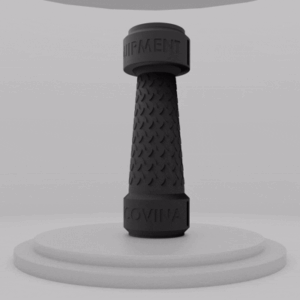 Double Strapped Conical€ 13,00
-
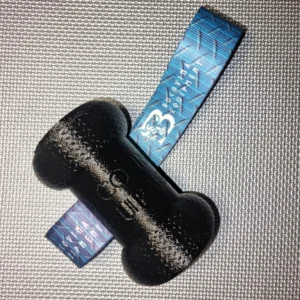 Riser€ 7,00
-
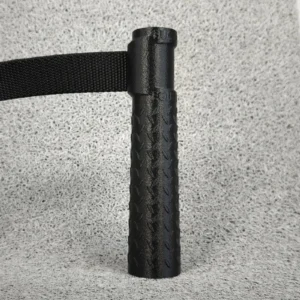 Conical€ 5,00
-
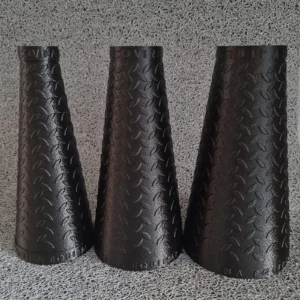 Conic Core€ 10,00
Free shipping to EU countries from EUR 100. Dispatch within 24 hours on working days. Browse every cone and riser in the rising category, and read about shapes in the handle guide.
Questions
What is a riser in arm wrestling?
A riser is a handle used for rising: lifting the hand up towards the thumb side of the wrist against a load while the forearm stays still.
What is rising in arm wrestling?
Rising is the movement of lifting the hand up towards the thumb side of the wrist. It trains the wrist for lifting and holding the hand against pressure.
How do I train rising?
Use a cone or riser handle on a cable, strap or weight. Lift, pause at the top and lower slowly with the forearm still. The sets and reps are a starting point, so adjust them to how you feel.
How do I rise in arm wrestling?
In training, keep the forearm still and lift the hand towards the thumb side. In a match, rising works together with the grip, the elbow position and the pull of the back.
What is a riser used for?
A riser handle is used to load the rising movement. A cone handle also suits toproll training, because you roll the wrist and fingers over the cone against the load.
Is a riser the same as a riser platform?
No. A riser platform is a platform that the rule book allows for competitors with a height disadvantage. The riser handle is a training tool for the wrist.