
To use a wrist wrench, hold the handle, connect its strap to a cable, pulley or loading pin, and turn your forearm against the load. Turn inward for pronation and outward for supination, slowly and under control. Keep the elbow steady, start with a light load and add load in small steps.
What a wrist wrench trains
A wrist wrench is a handle you turn against a load. The Wrist Wrench 70 is built for wrist strength, forearm endurance and overall grip control. Its shape and resistance-based design make the fingers, wrist and forearm work together. Turning the forearm inward is pronation. Turning it outward is supination. If these words are new, start with pronation and supination.
How to use a wrist wrench: setup
- Connect the strap to a cable, pulley or loading pin.
- Check that the connection is tight before every rep.
- Rest your forearm on a table or pad, or hold it against your body, so that only the forearm turns.
- Take the handle in your hand and set the cable so that the load tries to turn the forearm.
- Wrist wrench grip: wrap the fingers around the handle, keep the thumb in place, and hold firmly but not so hard that the forearm cannot turn.
- Choose a light load. The first reps should feel easy.
Wrist wrench exercises
Sets and reps below are a starting point; adjust them to how you feel.
Pronation turn
Trains the muscles that turn the forearm inward, which matter in toproll-style technique. Follow the toproll guide to see where it is used at the table.
- Start with the palm facing up or sideways.
- Turn the forearm inward against the load.
- Stop when the palm faces down, and return slowly to the start.
- Keep the elbow steady and let the forearm do the turning.
Common mistakes: moving the shoulder or the elbow, letting the handle snap back, and using too much load so the turn becomes short.
Start with 3 sets of 8 reps.
Supination turn
Trains the muscles that turn the forearm outward. Together with pronation it makes the forearm strong in both directions.
- Start with the palm facing down or sideways.
- Turn the forearm outward against the load.
- Stop when the palm faces up, and return slowly to the start.
- Keep the wrist in line with the forearm.
Common mistakes: bending the wrist instead of turning the forearm, using body swing, and rushing the return.
Start with 3 sets of 8 reps.
Hold at the end
Trains control at the end of the turn, where the muscles have to work hard.
- Turn the forearm to the end position, as in the exercises above.
- Hold the position for a moment, then return slowly.
- Increase the hold in small steps, from 2 seconds to 5 seconds.
Common mistakes: holding your breath and letting the elbow drift. Start with 3 holds of 2 to 3 seconds, after your normal sets.
Slow return
Trains control as the load pulls back. Take twice as long to return the handle to the start as the turn took. Use a lighter load than for the normal turn, and keep the movement smooth. Start with 2 sets of 6 reps.
Check the wrench before every session
- Keep it dry and clean.
- Check it before each use.
- Do not use it if it is cracked, bent, frayed or damaged.
- Keep it away from high heat, such as a hot car or a radiator.
Where it fits in your week
Wrist wrench training belongs on a rotation day, after your warm up and before heavy pulling, when the forearm is still fresh. A simple pattern is one or two short sessions a week: three sets of pronation turns and three sets of supination turns, then a few holds at the end. Wrist curls and reverse wrist curls fit on the same day, as shown in the weekly program.
How to progress
- Add reps first, up to 12 per set.
- Then add a little load and go back to 8 reps.
- Train two days a week and keep a rest day between sessions.
- Keep reps slow and controlled at every load.
Wrist wrench and the other pronation tools
The wrench is one of several handles for forearm rotation. The Pronator is a handle you turn inward against a load. The Twister is a tool for twisting movements of the forearm, for both directions. For the full set of exercises, see pronation and supination exercises. For the wrist movements that go with them, see wrist and forearm exercises. All three tools sit in the pronation range.
-
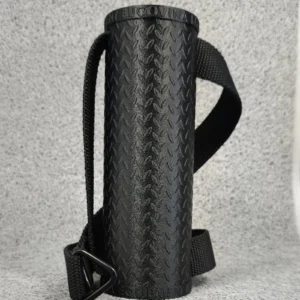 Wrist Wrench 70€ 15,00
-
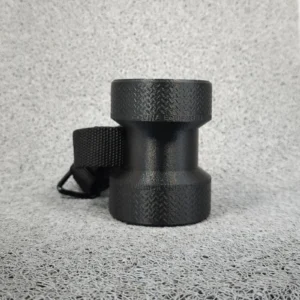 Twister€ 7,00
-
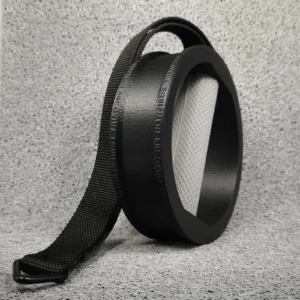 Pronator€ 15,00
Free shipping to EU countries from EUR 100. Dispatch within 24 hours on working days. Back to all armwrestling training.
Questions
How do I use a wrist wrench?
Connect the strap to a cable, pulley or loading pin, check the connection, and turn the forearm inward and outward against the load. Keep the elbow steady and the reps slow.
What is a wrist wrench for?
It trains wrist strength, forearm endurance and grip control by loading forearm rotation. Armwrestlers use it for pronation and supination work.
How often should I train with a wrist wrench?
Two sessions a week is a good start, with a rest day between them. Add reps first, then add a little load.
Can I use a wrist wrench without a cable?
The strap is made to connect to a cable, pulley or loading pin, so those are the set-ups we describe. Check the connection before every rep.