
To win at arm wrestling, set up square to the table with your elbow planted, take a deep grip with a straight wrist, and use technique and leverage before raw strength. Choose a style that fits your body and your opponent, and train the wrist, fingers and back so your grip does not give way. This guide covers stance, grip, hand and elbow position, tips for beginners and how to beat a stronger opponent.
How to win at arm wrestling: the basics
A match has a clear order. Learn it first, then add power.
- Stand or sit square to the table and brace your legs.
- Plant the elbow on the pad and hold the peg with the free hand.
- Take the grip palm to palm, deep, with a straight wrist.
- Wait for the referee. Do not move before the signal.
- Pull with the whole body, not with the arm alone.
- Keep the elbow on the pad until the match is over.
A match is won by a pin, or when the opponent collects two fouls. In the World Armwrestling Federation (WAF) rule book, version 2026, a pin happens when any part of the hand from the natural wrist line to the fingertips touches or goes below the touch pad. There is no time limit during a bout, so pace matters.
Stance: how to stand or sit at the table
Stay square to the table. Keep the feet wide and the knees soft, and keep the hips close to the table. The rules allow you to wrap a leg around a table leg or brace against the opposite leg before the start, and your feet may leave the floor during the match if you do not interfere with your opponent.
The rule book asks for the shoulders to be square to the table. They may slope to either side before the start. It also asks for a hand width between the shoulder and the forearm, and between the chin and the hand, before the start. The rule book lists two table heights: 71.1 cm for sit-down and 101.6 cm for stand-up. See the armwrestling table guide for the full set-up.
Grip: how to take the hold
The grip is palm to palm. In the rule book, the thumb knuckle must be visible and the forefingers level. Slide your hand in until the web between your thumb and index finger meets theirs, then wrap your fingers. The referee checks that the wrists are straight and the arms are centred, and then starts the match with the words ready, go.
Hold the peg with your free hand. Letting go of the peg gives a warning. Chalk and rosin are allowed, and fingernails should be trimmed.
Hand and elbow position
Keep the wrist straight and the fingers closed. A wrist that folds gives the opponent the angle. Keep the elbow in the middle of the pad.
The rule book gives a foul when the elbow lifts vertically off the pad, even a little, unless the triceps or forearm still touches the pad. It also gives a foul when the elbow extends beyond any side of the pad. Early movement is a warning, two warnings equal one foul, and two fouls lose the match. Read the full list in the armwrestling rules.
Tips for beginners
- Warm up before every session and control the weight.
- Learn the set-up before you learn power: stance, grip, elbow and shoulder position.
- Practise with a partner of similar size, slowly, and stop when you lose your position.
- Train both arms.
- Train the wrist, fingers and back as well as the biceps. The beginner plan shows a simple order.
- Learn one style first. Compare them in the techniques overview.
- Keep a short log of sessions. Note what held and what gave way.
- Find a club or an event in the competition section.
- Keep rest days between hard sessions.
How to beat a stronger opponent with technique
Technique does not remove a large strength gap, but it can close a small one. These habits give a weaker puller a better chance.
- Win the grip. A deep grip with closed fingers is hard to take apart.
- Attack the fingers and the wrist, not the whole arm.
- Choose the style that fits the gap. A toproll or a hook uses leverage, and a press needs more strength.
- Use side pressure and back pressure to move the hand off its strong line. See back pressure and side pressure.
- Keep the elbow planted and the shoulder square, so the pull comes from the whole body.
- Pace the effort.
- Learn the opponent’s habits and use a different style when one stops working.
Train it
Technique needs strength that fits the position. Start on the training hub and build wrist, finger and back strength alongside table practice. For forearm rotation, see pronation and supination. New to the sport and the shop? The start your journey page shows the buying path, and the FAQ page holds quick answers.
The right equipment for beginners
A beginner needs a table or a firm edge, a partner and a few simple tools. The Bundle 2Hands + Core Frame contains 2Hands and the Core Frame. The hands are hand-shaped cores that slide onto the 16 mm rod of the frame, which makes a handle set for grip and wrist training with your own cable, pulley or loading pin. A personalised strap connects a handle to a cable, in lengths from 1 m to 2.5 m. To choose a size, use the size guide.
-
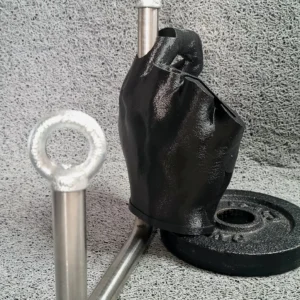 Bundle 2Hands + Core Frame€ 50,00
-
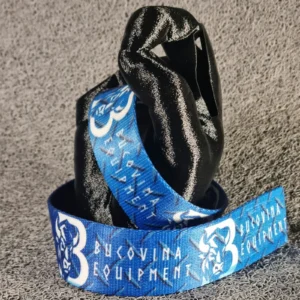 Personalized strap 40mmPrice range: € 5,00 through € 12,50
Free shipping to EU countries from EUR 100. Dispatch within 24 hours on working days.
Questions
Is arm wrestling about strength or technique?
Both. Strength decides how hard you can pull, and technique decides whether you can use it. A deep grip, a planted elbow and a good angle make the same strength count for more.
How do I start arm wrestling?
Learn the rules and the set-up, warm up, and practise slowly with a partner. Then add wrist, finger and back training. The beginner plan gives a simple start.
How can I get better at arm wrestling?
Work on the set-up first, then on one style. Train the weak link in your chain, which is often the wrist or the fingers, and keep rest days between hard sessions.
How do I beat a stronger opponent in arm wrestling?
Win the grip, attack the fingers and wrist, keep the elbow planted and pace the effort. Technique closes small gaps, not large ones.
Does height matter in arm wrestling?
Height changes your leverage. The rule book allows riser platforms for competitors who have a height disadvantage, so that the waist is at least at tabletop level.
How do I arm wrestle safely?
Warm up, control the weight, keep the shoulder square and never force it ahead of the arm. Stop the moment you lose your position. The rules class some shoulder positions as dangerous.