
The armwrestling hook is a style where you curl your wrist in, wrap your fingers deep around the opponent’s hand and pull their hand towards your body with your biceps, forearm and back. It is a close, tight position: your wrist and elbow stay in, and the opponent’s wrist is trapped. This guide explains how to hook, how to train the hook and how to defend against it.
What is the armwrestling hook?
The hook is one of the three main styles, next to the toproll and the press. The idea is to trap their wrist so their hand cannot turn, then pull the hand towards your body and down to the pad.
You may hear about a deep hook or a high hook. These words describe how deep and how high your hand sits on the opponent’s hand. Coaches use them in different ways, so ask your coach what is meant. For a side-by-side view of all three styles, see the techniques overview.
How the hook works
Set-up and grip
Take the grip palm to palm. In the World Armwrestling Federation (WAF) rule book, version 2026, the thumb knuckle must be visible and the wrists straight when the referee starts the match. Slide your hand in until the web between your thumb and index finger meets theirs. Then wrap your fingers around the outside of their hand.
Hand and wrist
Curl the wrist in towards the forearm. This is called cupping. The cup keeps the opponent’s wrist from turning, so keep it strong. If your wrist opens, the opponent can roll over your hand.
Arm and elbow
Keep the elbow planted on the pad, bent and close to your body line. The rule book gives a foul when the elbow lifts off the pad. Pull in towards your body, not upwards.
Body
Sit or stand square to the table with the shoulders square. Brace your legs. The rules allow you to wrap a leg around the table leg before the start. Lock the cup first, then pull with the biceps and the back together. Pulling with the arm alone loses the position.
How to train the hook
Hook training has five parts: wrist curl, fingers, forearm turn, biceps and back, and the set-up. The sets and reps below are a starting point; adjust them to how you feel. Warm up first and control the weight on every rep.
- Cupping: curl the hand in against a load with a wrist exerciser or a hook core, then open it slowly. Try 2 to 3 sets of 6 to 10 reps. See the cupping guide and the wrist and forearm exercises.
- Hook holds: on a cable, keep the fingers hooked and the wrist curled, pull slowly and hold for a moment before you return.
- Supination: turn the forearm outward against a load. See the pronation and supination exercises.
- Fingers and thumb: the hook is held by the fingers. See finger and thumb exercises.
- Biceps and back: curls and rows build the pull. See upper-body exercises.
- Table practice: with a partner, set up slowly, take the deep grip and lock the cup at low effort. Add speed only when the position holds.
Use a strap to connect the handle to a cable. The straps and belts guide shows lengths and knots. Keep rest days between hard sessions.
How to defend against the hook
A hook works when the opponent gets a deep grip and a cupped wrist. To counter a hook in arm wrestling, stop that from happening.
- Take the grip first. Keep your fingers high on their hand and your wrist straight before the referee starts.
- Keep your wrist strong. Do not let it fold in.
- Keep your fingers closed and press your hand forward against theirs.
- Turn your hand over theirs with a toproll, so their wrist cannot curl in.
- Use side pressure to push their hand away from their body line. See back pressure and side pressure.
- Keep the elbow planted and the shoulder square, so they cannot pull you into their chest line.
When the hook fails
- The grip is shallow, so the wrist cannot be trapped.
- The wrist opens under pressure.
- The elbow lifts off the pad, which is a foul.
- The opponent gets over your hand with a press.
The right equipment for hook training
The Hook Lock Core is an armwrestling hook handle for hook and cupping training. The metal part is not included. The bundle contains the Hook Lock Core and the Core Frame, so cores slide onto the 16 mm rod and you can add other cores later. The Wrist Flex is a wrist exerciser for flexion and cupping work. A personalised strap connects a handle to a cable, pulley or loading pin, in lengths from 1 m to 2.5 m.
-
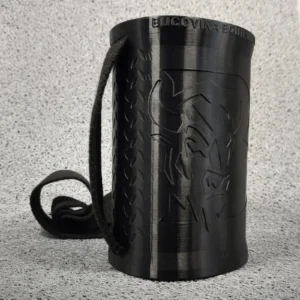 Wrist Flex€ 15,00
-
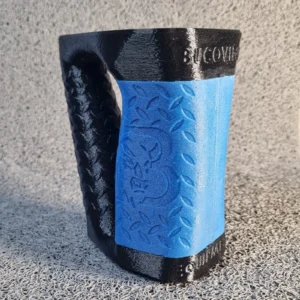 Hook Lock Core€ 20,00
-
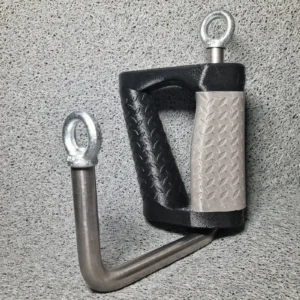 Bundle Hook Lock Core & Core Frame€ 50,00
-
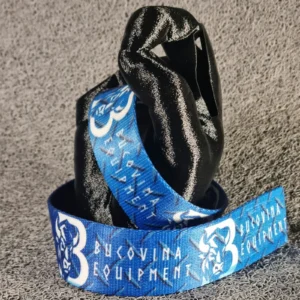 Personalized strap 40mmPrice range: € 5,00 through € 12,50
Free shipping to EU countries from EUR 100. Dispatch within 24 hours on working days. See every hook and cupping tool in the cupping category, and more shapes in the handle guide.
Questions
What is hook in arm wrestling?
Hook is a style where you curl the wrist in, wrap the fingers deep around the opponent’s hand and pull the hand towards your body. It is a close, tight position.
How do I hook in arm wrestling?
Take a deep grip, curl the wrist in to lock the cup, keep the elbow planted and pull with the biceps and back together. Practise the set-up slowly with a partner before you add speed.
How do I train hook?
Train the wrist curl, the fingers, the forearm turn, the biceps and the back. Use a wrist exerciser or hook core on a cable, plus rows and curls. The sets and reps are a starting point, so adjust them to how you feel.
How do I counter or block a hook?
Keep your fingers high, your wrist straight and your fingers closed, and turn your hand over theirs so the wrist cannot curl in. Push the hand away from their body line with side pressure.
How do I take the grip against a hook?
Go high on their hand with your fingers and keep your wrist straight before the referee starts. A hook needs a deep grip, so deny the depth.
What does hook lock mean?
On this site, Hook Lock Core is the name of a product: a core for hook and cupping training that slides onto a rod. The metal part is not included.